
Home
Who’s That Doll? Your Vintage Fashion Doll Identification Guide
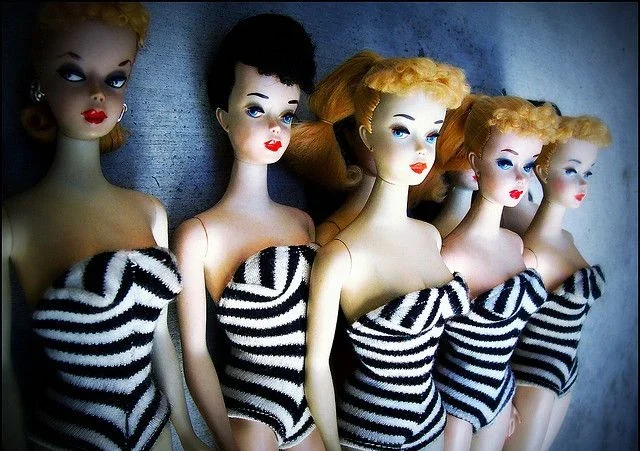
There’s a particular thrill that comes from rummaging through a dusty cardboard box at a UK car boot sale and spotting a tiny, forgotten face staring back at you. We’ve all been there—kneeling on damp grass, turning over a miniature mannequin in our palms, and whispering that very question: “Who’s that doll?” Our team has been obsessed with naming these mysterious fashion plates for years, piecing together clues from a twist of a waist or the stamp on a neck. We created this resource to share that detective work, helping you transform a jumble of vintage vinyl into a named, cherished part of British toy history.
Spotting a Dawn Doll: The Topper Corporation’s Pocket-Sized Revolution
In the vast universe of vintage fashion dolls, few are as charmingly petite as Dawn. Launched by the Topper Corporation in 1970, these dolls measure exactly 6.5 inches tall, making them a true pocket-sized revolution. With their rooted eyelashes, twist waists, and an impossibly glamorous wardrobe, they were designed to compete in a market dominated by larger rivals. For UK collectors, the waters are slightly muddied by regional distribution quirks, which means you might be holding a genuine Topper treasure or a licensed British variant without even realising it.
When we first pick up a potential Dawn doll, we look for her unique proportions. The body is slender, with a clearly defined twist waist that allows the torso to rotate. The most telling feature is the rooted eyelashes framing the painted eyes, a detail that sets her apart from cheaper imitations. Genuine Topper Dawn dolls typically feature a straight, non-bending leg design and a specific glossy finish that feels distinct to the touch.
Identifying the character is the next delightful challenge. The core group includes Angie, the blonde-bobbed leader; Dale, with her darker flip hairstyle; and Gloria, frequently found with raven-black locks. Then there is Longlocks, a sought-after model whose cascading hair was her ultimate selling point. Our team always gets a rush when we spot a Longlocks in a mixed lot, as those extra-long tresses are a dead giveaway.
This is where things get interesting for British collectors. Palitoy distributed Dawn dolls in the UK under license from Topper, and these releases sometimes confuse collectors. The Palitoy packaging often featured distinctive British branding, and while the dolls themselves remained faithful to the Topper moulds, the accompanying fashion packs occasionally featured UK-exclusive fabrics. Finding a Dawn in a Palitoy-branded box at a fair is a true victory for us.
Beyond Dawn: Identifying Other Major Vintage Fashion Doll Lines
While we adore Dawn, a true identification expert must look beyond the 6.5-inch frame. The vintage market is saturated with stunning models from rival manufacturers, each with a distinct personality. From the quintessentially British charm of Sindy to the all-American wholesomeness of Tammy, knowing the subtle differences in facial screening and body shape is essential.
Pedigree launched Sindy in the UK in 1963 as a fashionable alternative to Barbie, and she quickly became the nation’s sweetheart. The early Pedigree era dolls possess a gentle, rounder face and a more youthful figure compared to her American rival. Crucially, early Sindy dolls were manufactured in England with ‘Made in England’ body stamps. When Hasbro took over later, the face sculpts became harder and the bodies lost some of that early solidity, so checking the country of origin mark is our first port of call.
Often found in UK mixed lots, Tammy by Ideal is the wholesome American cousin of the bunch. She has a distinctively sweet, teenaged face quite different from Sindy’s reserved smile or Dawn’s high-fashion pout. Tammy’s body is slightly larger than Dawn’s but shares that twist-waist functionality. We identify her by the chunky, solid feel of her vinyl and the distinct Ideal stamp on her lower back.
The late 1970s and 1980s unleashed a flood of glamorous clones hoping to capitalise on the Superstar Barbie aesthetic. These dolls feature dramatic eye makeup, big hair, and glittering outfits. To distinguish a genuine Barbie from a clone, we look at the hand moulds; genuine Mattel dolls have more refined fingers and distinct wrist joints. The quality of the hair rooting and the specific shade of the ‘Barbie pink’ skin tone are also dead giveaways.
The Detective Work: Makers’ Marks, Moulds, and Materials
For our team, identification is a forensic process. We move past the painted smile and focus on the physical evidence hidden on the doll’s body. The type of plastic, the location of a seam, and the specific phrasing of a stamp tell a story that a faded face might not. This is the science behind the art, and it is the only way to accurately date a doll that has lost its original clothing.
The back of the neck is a doll’s biography. We use a magnifying glass to read these tiny inscriptions. A simple ‘Made in Hong Kong’ often points to the 1960s or 1970s manufacturing boom, while ‘Made in England’ is a proud badge of early Sindy dolls. We also look for specific manufacturer initials or mould numbers, which can instantly narrow down the year and factory of origin.
Weight is a brilliant indicator of age. Early fashion dolls from the 1960s often have torsos made of hard, hollow plastic that makes a distinct tapping sound when knocked. Later dolls transitioned to softer, solid vinyl that feels heavier and has a slight give when squeezed. When we handle a doll with a rigid, hollow body and a shiny face, we know we are likely holding a piece from the earliest days of the fashion doll craze.
You can identify a manufacturer by how they planted the hair. We study the rooting pattern inside the scalp; a zig-zag, dense pattern often indicates a higher-quality vintage doll, whereas sparse, straight lines of plugs are a hallmark of budget clones. Topper’s Dawn dolls, for instance, often feature a specific swirl pattern at the crown designed to hide the scalp, a clever trick that cheap copies rarely bothered to replicate.
Dressing the Part: Using Fashions to Confirm a Doll’s Identity
A naked doll is a puzzle, but a dressed doll is a confession. The textiles, fasteners, and cut of a garment are often the final proof we need to confirm an identity. Original outfits fit the doll’s specific body proportions perfectly, without straining at the seams or sagging at the bust. We treat vintage fabrics as historical documents, charting the evolution from stiff cottons to slinky nylons.
Topper produced an incredible array of miniature fashion packs for Dawn. These tiny garments often featured ‘Mod’ geometrics of the 1970s, including bold colour-blocking and psychedelic prints scaled down to fit a 6.5-inch frame. We look for the metallic gold and silver lamé gowns that were staples of the Dawn glamour line, as these are often missing or degraded, making a complete outfit highly collectable.
Pedigree dressed Sindy in the very best of London fashion. Her swinging sixties wardrobe is a textile time capsule, featuring mini skirts, duffle coats, and smart shift dresses. We identify authentic Pedigree pieces by the high-quality stitching and the scaled-down, realistic fastenings. The fabrics often mirror the trends of Carnaby Street, making a genuine Sindy dress instantly recognisable by its neat darts and period-accurate silhouette.
One of the quickest dating methods we teach is the fastener check. Early vintage dolls from the 1960s almost exclusively used tiny metal snaps for their clothing closures. As the 1970s progressed, manufacturers began transitioning to hook-and-loop fasteners. If we see a dress with a metal zipper or a sew-on snap, we know we are handling a high-quality garment from the earliest era of mass-produced doll fashion.
Restoration Tips and Joining the UK Collecting Community
Identifying a doll is only half the journey; bringing her back to her former glory is where the true love lies. We believe in gentle, conservation-minded restoration that respects the doll’s age. The UK boasts a vibrant, welcoming community of collectors eager to swap tips and spare parts.
Our team swears by a gentle approach to cleaning. For sticky vinyl, we avoid harsh chemicals and instead use a paste of bicarbonate of soda and water, applied with a soft toothbrush to draw out plasticizer residue. For delicate fabrics, a gentle soak in cool water with a mild, dye-free soap works wonders. We always test for colourfastness on an inconspicuous inside seam before submerging a vintage garment entirely.
Many older dolls with twist waists rely on elastic bands to hold their limbs in place. Over time, these bands snap. Re-stringing can seem daunting, but we find it incredibly satisfying. Using a small crochet hook and fresh elastic cord, you can carefully thread the limbs back onto the internal hooks, restoring the doll’s poseability without altering her original structure.
There is nothing quite like the tactile joy of hunting at a fair. UK doll fairs in Birmingham and London are prime spots for finding vintage fashion dolls, offering everything from rare boxed Dawns to bags of mixed accessories. We highly recommend joining dedicated online forums and Facebook groups where members share their latest car boot hauls. These communities are the best resource for instant identification and often lead to lifelong friendships built on a shared love of tiny vintage wardrobes.
Frequently Asked Questions
Here are the most common questions we receive from fellow collectors:
- What makes Dawn dolls different from other small vintage dolls? Dawn dolls measure exactly 6.5 inches tall, making them distinctly smaller than standard fashion dolls like Sindy or Barbie. Their most identifiable features are the rooted eyelashes, a twist waist that rotates the torso, and the high-fashion ‘Mod’ styling of their original clothing. They were produced by the Topper Corporation and distributed in the UK by Palitoy.
- How can I tell if my Sindy doll is an early Pedigree model? We always check the stamp on her lower back first. Early Sindy dolls were manufactured in England and will proudly display a ‘Made in England’ body stamp. Additionally, look for a hard, hollow plastic torso rather than soft vinyl, and a rounder, more youthful face sculpt with gentle facial screening.
- Where is the best place to find vintage dolls for sale in the UK? We find that specialised doll fairs are the most rewarding hunting grounds. UK doll fairs in Birmingham and London are prime spots for finding vintage fashion dolls, offering a wide range from budget restoration projects to rare boxed collectibles. Online auction sites and local car boot sales are also excellent sources for mixed lots.
- Why does my doll have ‘Made in Hong Kong’ on her neck? A ‘Made in Hong Kong’ mark is a classic indicator of a doll produced during the mass-manufacturing boom of the 1960s and 1970s. Many major American and British companies outsourced production to Hong Kong during this era. The mark helps us date the doll to this period, but you must combine it with the face mould and body style to identify the specific manufacturer.
- Is it safe to use household cleaners on a dirty vintage doll? We strongly advise against using harsh household cleaners, as they can strip paint and damage the vinyl. Our team recommends a gentle paste of bicarbonate of soda and water for sticky bodies, and a mild, dye-free soap for fabrics. Always spot-test clothing in an unseen area before cleaning to ensure the dyes do not run.